

The short answer is YES! Now, let’s dive deeper into why you should consider accreditation when choosing an online school.
What is accreditation?
Accreditation is a voluntary process by which schools prove they have met or exceeded the standards of quality when it comes to curriculum, overall student learning, and operational procedures. It also helps students know they will have acceptability for transfer with the credits they earn.
An accreditation review is completed by a third-party to ensure accountability and quality of evaluation. A large part of the accreditation review includes a continuous improvement journey, so schools are focused on improvement, not just meeting standards one time. Accreditation can be seen as a journey, not as an event, as schools continue to adjust to meet expectations and ensure the highest quality learning possible.
Why is it important?
It helps give the peace of mind to students knowing they are attending an institution that will provide quality support, education, and transferability to other schools and post-secondary institutions.
Colleges might not accept diplomas earned through a non-accredited institution. As such, having a diploma from an accredited school can greatly impact how employers, other high schools, and even colleges/universities view the quality of the diploma.
Another important factor to note is that non-accredited institutions sometimes award credit with little to no work completed and are often referred to as “credit mills”. These institutions will not prepare you for post-secondary learning or the workforce. There is also the risk that the diploma will not be accepted or seen as credible if it comes from a non-accredited source.
Who accredits Mountain Point Academy?
We are regionally accredited to ensure the highest probability of credit transferability and acceptance for our students, as well as a proven history of holding schools to rigorous research-based standards.
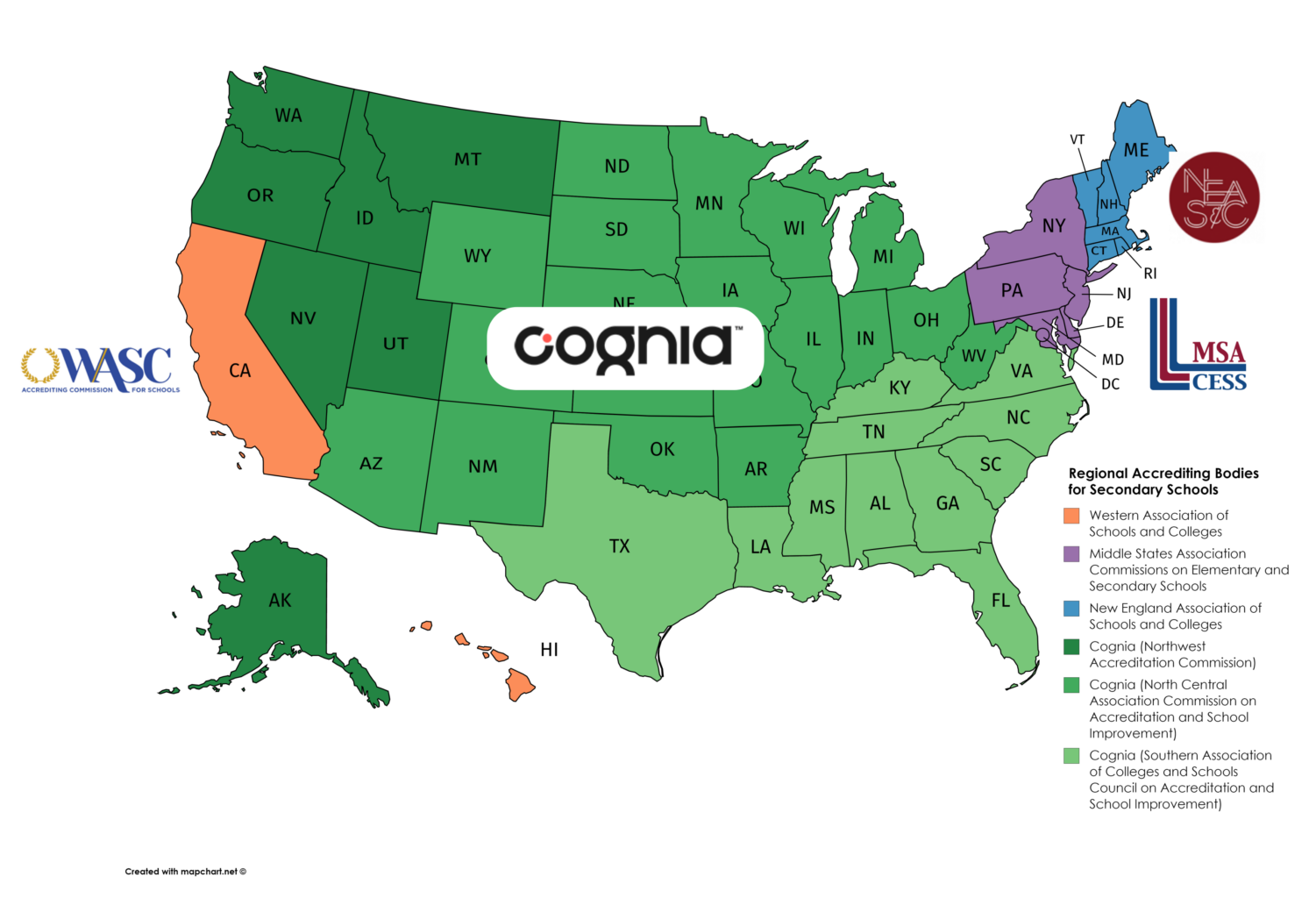
Cognia (formerly AdvancED) is the parent organization for the North Central Association Commission on Accreditation and School Improvement (NCA CASI), Northwest Accreditation Commission (NWAC) and the Southern Association of Colleges and Schools Council on Accreditation and School Improvement (SACS CASI).
Cognia provides standard-based protocols that schools must meet or exceed in order to receive accreditation for their program. They provide tools and resources to help schools continue moving forward on their continuous improvement journey, helping them achieve the best education standards for student learning.
Cognia offers accreditation and certification, assessment, professional learning, and improvement services to institutions and other education providers. As a global nonprofit working in over 80 countries, Cognia serves 36,000 institutions, nearly 25 million students, and five million educators every day. To learn more about Cognia please visit their website: cognia.org
Why should I attend an accredited school?
If you have plans to attend a university or other post-secondary institution, you will need to ensure you have attended an accredited high school so your credits will transfer and meet the expectations for college acceptance.
Accreditation affects not just whether your diploma is recognized, but also how your credits count toward graduation requirements. If you’re mapping out your plan, see how many credits you need to graduate and what subjects are typically required.
It also helps ensure you earn a quality education with learning that will stick. Accredited schools go through a rigorous process of standards-based protocols to ensure that the education offered is high-quality, challenging, and will prepare learners for their next levels, whether that be post-secondary education or the workforce.
What type of accreditation should I look for when choosing a school?
When deciding on a school to attend, you should:
- Look for an accreditation that is recognized from a regional or state level
- Watch out for red flags (for example, the school promises that you can earn a high school diploma in 6 months or awards credit for very little work completed)
- Review their course catalog to ensure they have a high level of rigorous curriculum
There are currently six different regional accrediting bodies, several of which are subsidiaries of Cognia (formerly AdvancED). As a starting point for your research, the Kansas Department of Education has put together an unofficial list of recognized associations for accreditation. You can use this as a reference/starting point for your own research. Click here to access that. The map below gives a visual representation of the six regional accrediting bodies in the United States.
We hope you found this helpful and informative about why accreditation is such an important factor for schools.
Let us know if you have any questions about accreditation!
Anjilee & Sara